
Is Roof Rejuvenation Legit? How to Evaluate Testing, Reviews, Warranties and Red Flags
Roof rejuvenation can be a legitimate maintenance option, but only when the roof qualifies, the product claims are documented, and the provider is transparent about what the treatment can and cannot do.

Roof rejuvenation can sound too good to be true.
A treatment for aging shingles that may delay replacement? A greener option? A fraction of the disruption?
It is reasonable to be skeptical.
The honest answer is this: roof rejuvenation is not automatically a scam—but it is not automatically a smart investment either. Whether it is legitimate for your home depends on three things:
- Whether your roof is actually a suitable candidate.
- Whether the product and its claims are properly documented.
- Whether the provider is willing to be specific, transparent, and honest about the limits.
A credible provider should help you understand all three. A poor one will try to skip straight to the sale.
Can Roof Rejuvenation Be Legitimate?
Roof rejuvenation may be a legitimate maintenance option for a qualifying asphalt shingle roof. It is not a replacement for roof repairs, storm-damage work, or a full replacement when the roof has already failed.
Treat bold promises carefully. Any claim about performance, effectiveness, lifespan, environmental benefit, or cost savings should be tied to the exact product, the condition of your roof, and documentation you can review.
Start With the Right Question
That distinction matters because roof rejuvenation is not one universal product or one universal outcome.
Different treatments can have different ingredients, application methods, warranties, safety information, and supporting evidence. A roof that may be a reasonable candidate for one approach may not be a good candidate at all if it has active leaks, significant hail damage, soft decking, missing shingles, or failed flashing.
Read: Does My Roof Qualify for Roof Rejuvenation? →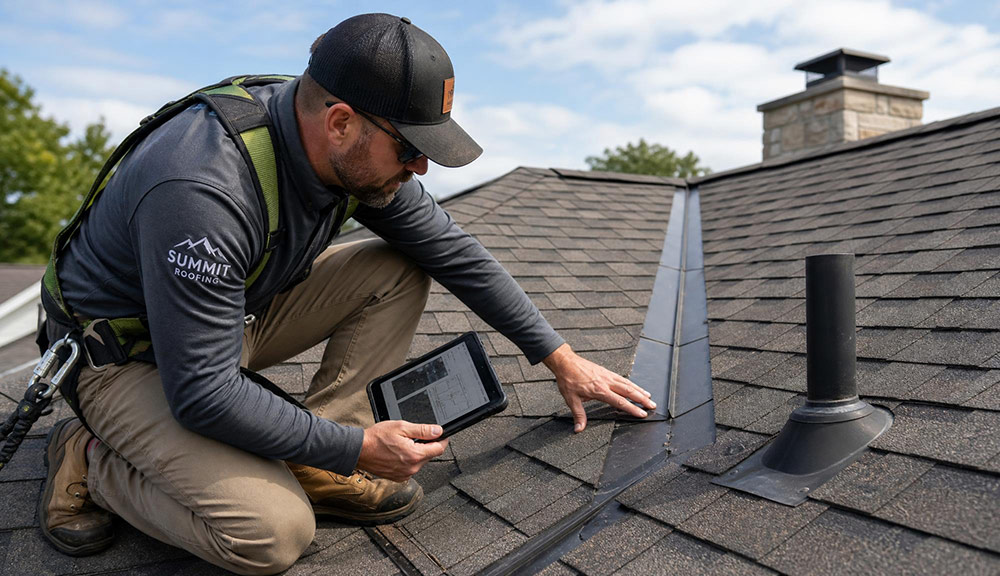
They Inspect Before They Sell
A legitimate provider should want to know what condition your roof is in before recommending treatment.
That does not need to mean a dramatic, high-pressure inspection. It means they should be willing to assess the roof, explain what they see, and tell you if repair or replacement is the smarter option.
Good Signs Include
- They explain why your roof may qualify.
- They identify any repairs needed first.
- They document the roof’s condition with notes or photos.
- They can explain what would disqualify a roof.
- They are comfortable saying “this is not the right fit.”
Be cautious if someone offers to treat any roof without looking at its condition, dismisses visible damage, or suggests that a spray can solve structural problems. It cannot.
They Tell You Exactly What They Are Applying
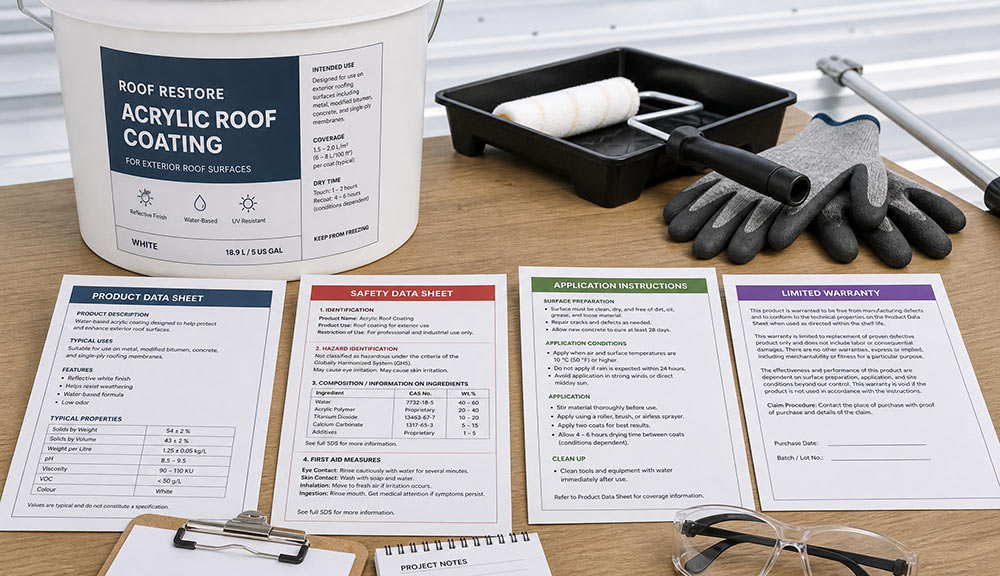
You should not have to accept vague answers such as “our special formula” or “a safe roof coating.”
Ask for:
- The exact product name.
- The manufacturer or supplier.
- The product data sheet.
- The safety data sheet, where applicable.
- The application instructions or process.
- The warranty document.
A Safety Data Sheet, commonly called an SDS, is designed to identify a product, its hazards, safe-handling information, and emergency-response measures. It is not a marketing brochure—and that is precisely why it is useful.
A provider does not need to turn your driveway into a chemistry class. They should, however, be able to show you what is being used and answer reasonable questions about property protection, pets, gardens, runoff, and application conditions.
The Claim Comes With Proof
Those may be meaningful claims. But they are still claims.
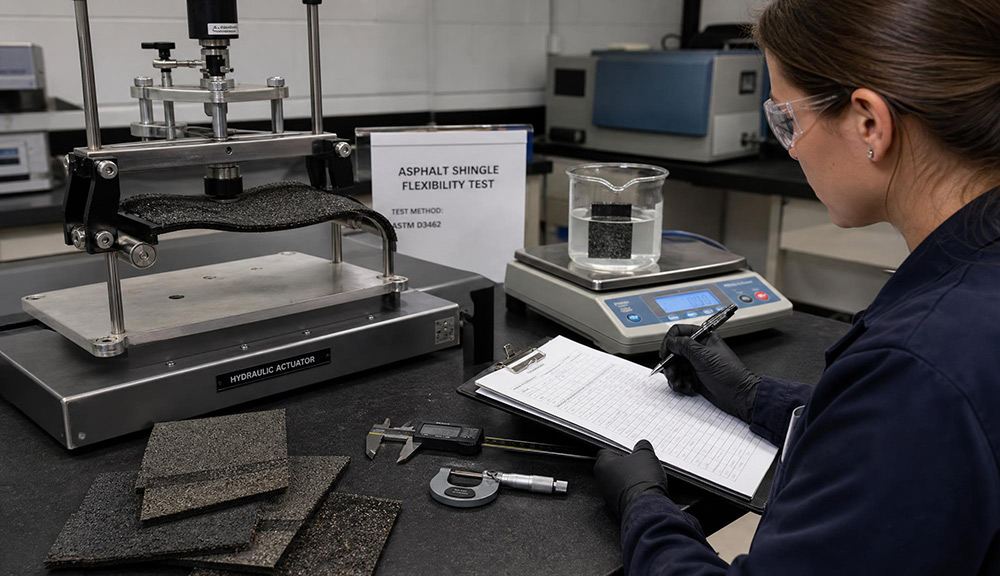
Ask what supports them.
In Canada, performance, efficacy, product-life, and environmental-benefit claims should be supported by appropriate evidence—not just a confident sales pitch. The Competition Bureau warns that product-performance and environmental claims need adequate support and should not create a misleading overall impression.
Competition Bureau Canada: Environmental Claims and Greenwashing →The Most Useful Evidence Is Specific
- The exact product being tested.
- Who performed the testing.
- What was measured.
- How the test was conducted.
- What the result does—and does not—show.
- Whether the evidence applies to the product currently being offered.
- Whether field results, rather than only lab results, are available.
A lab test can be helpful. It is not the same thing as a guarantee that every roof will perform the same way in every climate. That is not a flaw in the test. It is simply the difference between controlled evidence and your particular roof.

How to Read Reviews Without Fooling Yourself
Reviews are useful—but only if you read them for patterns, not stars.
A page full of five-star reviews can tell you that customers liked the provider. It does not, by itself, prove a product will add a specific number of years to your roof.
Look for Reviews That Answer Practical Questions
- Was the provider clear about whether the roof qualified?
- Did the crew show up, protect the property, and clean up?
- Were repairs or limitations explained before work began?
- Did the homeowner receive photos or documentation?
- Was there a follow-up after the work?
- Are there reviews written months or years later?
Also look beyond the company’s own website. Search the business name alongside words such as “reviews,” “complaint,” and “warranty.” Read both praise and criticism. A credible business is not defined by having zero negative feedback; it is defined by whether its record and response feel transparent.
What a Useful Warranty Actually Looks Like
A warranty is only valuable if you understand what it covers.
Before agreeing to work, ask for the warranty in writing and read it before you sign. Pay attention to:
- Who provides the warranty: manufacturer, installer, or both?
- What exactly is covered?
- How long does coverage last?
- What conditions or maintenance requirements apply?
- What is excluded?
- Does it cover workmanship, product performance, or both?
- Is it transferable if you sell the home?
- What happens if you need to make a claim?
- Who is responsible if the local provider is no longer operating?
Be especially careful with broad phrases such as “guaranteed roof life” or “warranty-backed results” if the provider will not show you the actual terms. A warranty should reduce uncertainty, not create more of it.
Red Flags Homeowners Should Take Seriously
None of these automatically prove a provider is dishonest. But several together should make you pause.
The goal is not to interrogate everyone who gives you a quote. The goal is to make sure the provider can answer normal homeowner questions without becoming vague, defensive, or pushy.
A Simple Provider Checklist
Use this before you book.
About Your Roof
- They inspected the roof or explained how it will be assessed.
- They explained why the roof may qualify.
- They explained what would make treatment a bad idea.
- They identified any repairs needed before treatment.
About the Product
- They identified the exact product being applied.
- They provided product and safety documentation on request.
- They explained the application process.
- They explained how they protect landscaping, pets, and surrounding property.
About the Promise
- They can show the basis for performance or lifespan claims.
- They clearly explain what results are realistic.
- They do not present treatment as a cure for a failing roof.
- They distinguish product evidence from their own marketing claims.
About the Provider
- The quote explains what is included.
- The warranty is available in writing before purchase.
- They can provide business and insurance information.
- Their reviews show a consistent record of communication and follow-through.
- They give you time to decide.
When Replacement Is the More Legitimate Answer
Roof rejuvenation is not “better” than replacement in every situation.
A replacement may be the more responsible choice when the roof has active leaks, major storm damage, significant shingle loss, structural issues, or too little healthy life left to preserve.
The most trustworthy provider is not the one who insists every roof can be treated. It is the one who can explain which option makes sense for your roof—and why.
You Should Not Need Blind Faith
Roof rejuvenation can be legitimate. But homeowners should not need blind faith to feel comfortable with it.
Ask for the roof assessment. Ask what product is being used. Ask for the supporting documentation. Read the warranty. Look for specific, verifiable answers instead of broad promises.
If the provider welcomes those questions, you are probably having the right conversation.
If they avoid them, keep looking.
Common Questions
Is roof rejuvenation a scam?
No single answer applies to every product or provider. It can be a legitimate maintenance option for an appropriate roof, but homeowners should evaluate the roof condition, product documentation, warranty, provider record, and evidence behind the claims.
Can roof rejuvenation fix a leaking roof?
No. A leak needs to be diagnosed and repaired. Rejuvenation should not be used as a substitute for proper roof repairs.
What proof should I ask for?
Ask for the exact product name, product data sheet, safety documentation where applicable, warranty terms, explanation of the roof’s qualification, and evidence supporting any performance, lifespan, safety, or environmental claims.
Are five-star reviews enough?
No. Reviews can be useful, but look for specific details about communication, inspection, workmanship, documentation, follow-up, and results over time.
Should I trust an “eco-friendly” claim?
Ask what specific environmental benefit is being claimed and what evidence supports it. Broad environmental language is less useful than a clear, documented explanation.
Ready to compare roof-rejuvenation providers?
Review local providers, ask for product-specific documentation, and choose based on the actual condition of your roof.
Find a Roof-Rejuvenation Provider