
Roof Rejuvenation Products in Canada: How the Main Treatments Compare
Plant-based rejuvenators, nanotechnology systems and roof coatings can all sound similar at first. They aren't. Here's what homeowners should understand before choosing a treatment.
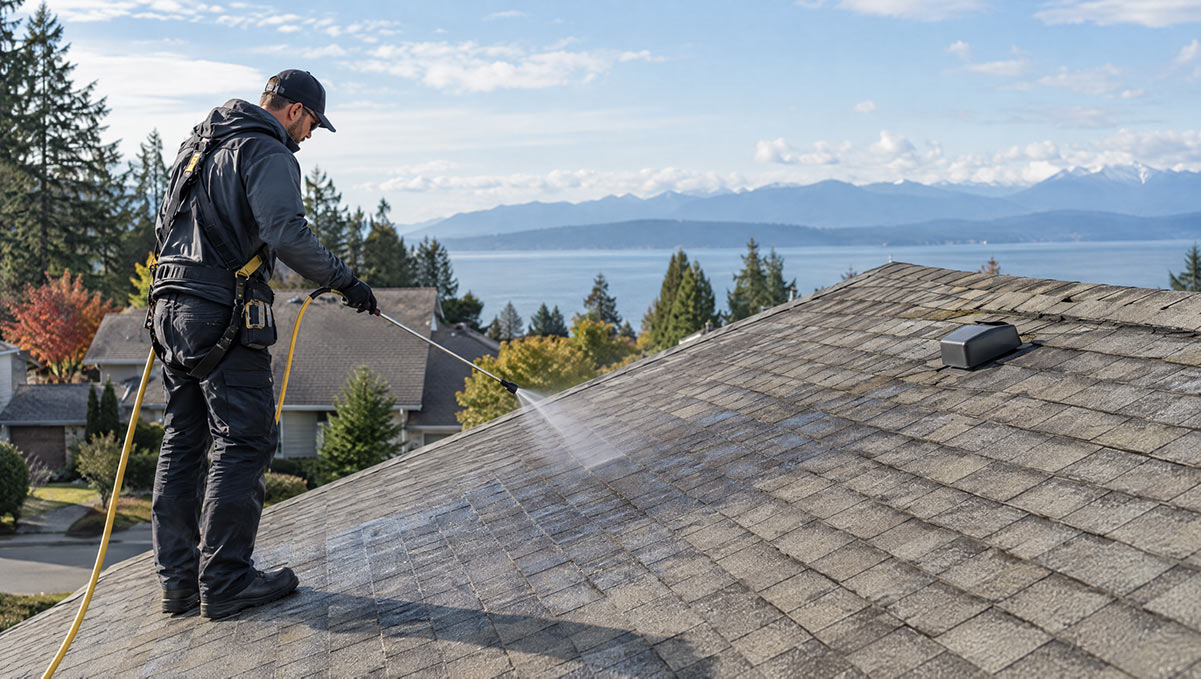
Canadian homeowners will mainly encounter plant- or bio-based penetrating rejuvenators and nanotechnology-based penetrating treatments. You may also see conventional roof coatings and sealants, but those work differently and should not automatically be treated as the same category.
If you've started researching roof rejuvenation, you've probably noticed something confusing.
A lot of very different products are being sold using very similar language.
“Roof rejuvenation.”
“Shingle restoration.”
“Roof preservation.”
“Structural rejuvenation.”
“Roof coating.”
They can all sound like versions of the same thing.
They aren't.
Some treatments are designed to penetrate aging asphalt shingles and replenish components lost through weathering.
Others use nanoscale materials intended to penetrate and reinforce the shingle.
Traditional roof coatings work differently again, generally creating a film over the surface of the roofing material.
Those differences affect what the treatment is actually trying to accomplish, what evidence you should ask for and what questions need to be answered about compatibility and warranty.
“What kind of treatment am I actually buying?”
One Important Warning About Aftermarket Roof Treatments
In July 2026, the Asphalt Roofing Manufacturers Association updated its guidance regarding field-applied coatings and rejuvenators on installed asphalt shingles.
ARMA's position is cautious. It recommends checking directly with the original shingle manufacturer before applying an aftermarket treatment because a field-applied product may affect characteristics such as fire performance, impact resistance, moisture behaviour or warranty coverage.
It does mean homeowners should not assume that the term “roof rejuvenation” equals approval from the company that manufactured their shingles.
If a provider says its treatment won't affect your existing shingle warranty, ask for documentation.
If the original manufacturer does not accept aftermarket treatment, understand what warranty the rejuvenation provider is offering instead.
That should be part of the comparison—not something you discover after treatment.
Roof Rejuvenation Is Not One Standardized Product
Two contractors can both tell you they “rejuvenate” asphalt shingles while proposing treatments that work in very different ways.

Plant or Bio-Based Penetrating Treatment
Designed to absorb into aging asphalt shingles and replenish components associated with flexibility and weathering.
Example: Bright Green Roof and other plant-derived rejuvenation systems.
Nanotechnology Penetrating Treatment
Uses nanoscale materials intended to penetrate the roofing material and change or reinforce characteristics within the shingle.
Example: GoNano NuRoof systems.
Surface Coating or Sealant
Creates a film or membrane over the exterior surface rather than primarily replenishing the existing asphalt from within.
Examples: Various acrylic, silicone and elastomeric roof coatings.
| Treatment Type | Basic Approach | Canadian Example | Main Idea |
|---|---|---|---|
| Plant/Bio-Based Penetrating | Absorbs into aging asphalt shingles | Bright Green Roof | Replenish components lost as asphalt weathers |
| Nanotechnology Penetrating | Uses nanoscale materials intended to penetrate the shingle | GoNano NuRoof | Modify or reinforce shingle performance and weather resistance |
| Surface Coating / Sealant | Creates a film over the roofing surface | Various coating products | Add an exterior protective layer rather than replenish the existing asphalt |
Plant-Based and Bio-Based Roof Rejuvenation Treatments
Plant-based treatments are probably what most homeowners picture when they hear the phrase roof rejuvenation oil.
The basic idea is relatively straightforward.
Asphalt shingles change as they age and weather. Over time, they become less flexible than they were when they were new.
A plant-derived treatment is sprayed over the roof and designed to penetrate through the granulated surface into the asphalt portion of the shingle.
The manufacturer then claims that the treatment restores or replenishes components lost during aging.
Roof Maxx is one well-known North American example and uses soy-derived chemistry.
Bright Green Roof uses a different plant-based formula and describes its treatment as 100% active and USDA Certified Biobased.
These products belong to the same broad family, but that does not mean the formulas, application rates, test results or warranties are identical.
What is the intended benefit?
The main goal is usually to improve or maintain flexibility in an aging shingle.
That matters because brittle asphalt is more susceptible to cracking and other physical deterioration.
Manufacturers may also make claims relating to granule adhesion, moisture resistance, wind performance, hail performance or weathering.
Those secondary claims should be evaluated individually.
Is Roof Rejuvenation Just Soybean Oil?
Not necessarily.
This question comes up frequently because soy-derived products helped popularize residential roof rejuvenation.
Some products do use soy-based chemistry.
Others use different plant-derived formulations.
And nanotechnology-based systems use a different approach again.
The more useful question isn't:
“Is there soy in this?”
It's:
“What exactly is this formulation designed to do, and what evidence shows that it does it?”
A bottle being plant-based doesn't automatically make it effective.
A product using synthetic chemistry doesn't automatically make it ineffective.
The evidence matters more than the marketing category.
Nanotechnology and Nanosilica Roof Treatments
The second major category takes a different approach.
GoNano is one of the most visible examples in Canada.
Its NuRoof products use nanoscale materials that the company says penetrate asphalt shingles rather than simply forming a conventional surface coating.
GoNano currently offers different systems for roofs at different ages and stages of deterioration.
NuRoof Fortify is marketed primarily toward newer roofs.
NuRoof Revive is intended for aging roofs.
Other NuRoof options provide different levels of treatment and warranty coverage.
Ask which GoNano product is actually being proposed.
How Is Nanotechnology Different From a Plant-Based Rejuvenator?
The biggest difference is the claimed mechanism.
Plant-based rejuvenators generally describe their job as replenishing components or restoring flexibility to aging asphalt.
Nanotechnology products describe their treatment as using nanoscale materials that penetrate and alter or reinforce characteristics within the roofing material.
Those are different technical claims.
That makes testing especially important.
If one product says it restores flexibility, ask how flexibility was measured.
If another claims improved impact, wind or fire performance, ask which standardized tests were used and whether you can see the results.
Roof Coatings and Sealants
This is where the terminology becomes especially messy.
There are numerous roof products that create an exterior film or membrane.
Depending on the system, coatings may be acrylic, silicone, elastomeric or based on other chemistries.
These can be legitimate products for roofing systems designed to use them.
That does not automatically mean they belong on asphalt shingles.
So if someone describes a treatment as a “rejuvenator,” ask one of the simplest questions possible:
Does it penetrate the asphalt shingle, or does it create a film over the surface?
If it creates a coating, evaluate it as a coating.
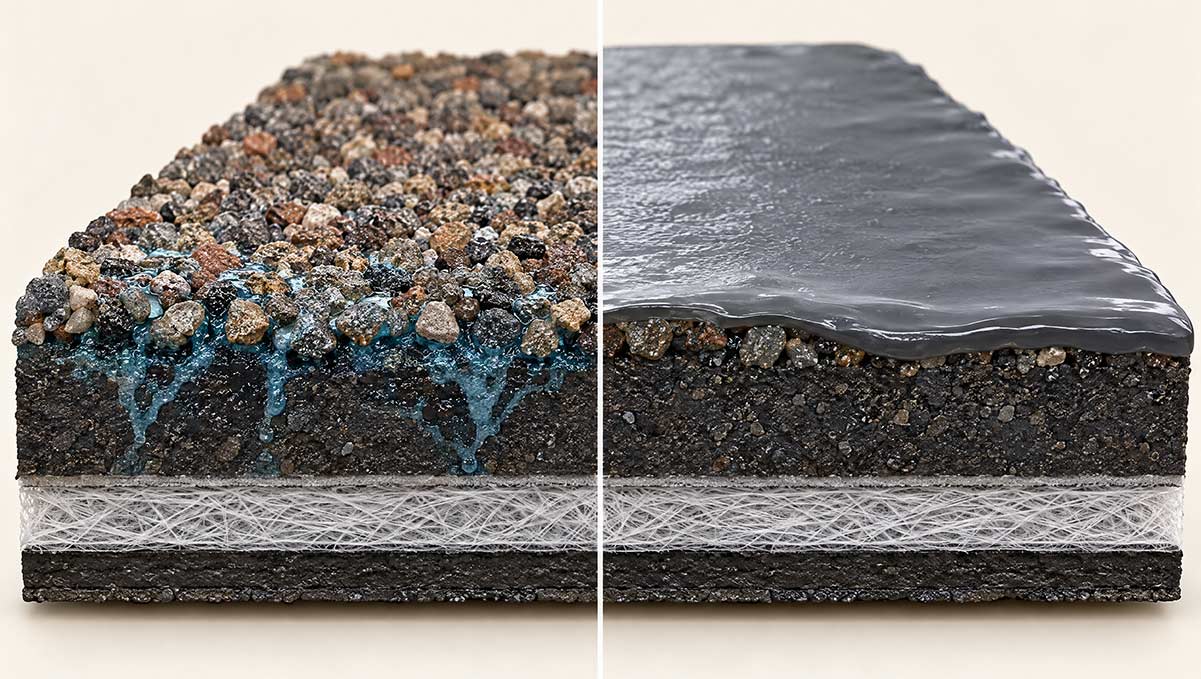
Penetrating Treatment vs. Surface Coating
The difference sounds technical, but it's actually fairly easy to understand.
Imagine applying something to a sponge.
A penetrating treatment is intended to move into the material.
A coating is intended primarily to remain over it.
On an asphalt roof, that distinction matters because the existing roofing system was designed around exposed mineral granules, drainage pathways, factory seal strips and particular fire and weather characteristics.
Which Type of Roof Rejuvenation Product Is Best?
There isn't enough independent evidence across every product in the category to honestly declare one chemistry universally best for every roof.
And that's probably not the most useful way to shop anyway.
The better treatment is the one that makes sense for the condition of your particular roof and has credible evidence behind the specific claims being made.
What is the treatment actually doing?
Replenishing asphalt components, altering material properties, or creating an exterior film are different approaches.
What independent testing exists?
Look for testing that actually corresponds to the performance claim being made.
What does the written coverage guarantee?
A lifespan claim and a written warranty are not the same thing.
What does your shingle manufacturer say?
Do not assume an aftermarket treatment is automatically accepted by the original manufacturer.
How Should You Compare Product Testing?
“Tested” can mean almost anything.
A company can test colour.
It can test absorption.
It can test flexibility.
It can test wind resistance, impact resistance or fire behaviour.
Those are completely different questions.
Bright Green Roof states that its treatment has undergone third-party testing using recognized ASTM methods and publishes claims relating to flexibility and other performance characteristics.
GoNano also publishes product testing tied to recognized standards and performance categories.
The presence of an ASTM, UL or other familiar acronym isn't enough on its own.
Make sure the report covers the exact treatment being sold.
A test on one substrate may not automatically apply to every shingle.
Flexibility, impact and fire performance answer different questions.
Read what the testing actually demonstrates rather than relying on the phrase “lab tested.”
Does USDA Certified Biobased Mean the Product Works?
No.
It tells you something different.
USDA Biobased certification relates to the biobased content or sourcing of a product.
Bright Green Roof uses that certification as evidence that its treatment is plant-derived.
That's useful if you're comparing environmental characteristics or composition.
It should not be confused with proof that a treatment adds a specific number of years to a roof.
Performance claims need performance evidence.
Is “Up to 10 Years” the Same as a 10-Year Warranty?
No.
This distinction is extremely important.
A company may advertise that its product can add up to 10 or 15 years of useful roof life while providing a shorter written warranty.
Those numbers describe different things.
The lifespan figure is a performance or longevity claim.
The warranty describes what the company has contractually agreed to cover.
Bright Green Roof, for example, advertises up to 10 years of additional life per qualifying treatment while using a 5-year transferable warranty.
GoNano's warranties vary by NuRoof product and roof condition.
Read the actual warranty.
Don't substitute the biggest number on a website for the written coverage.
Can Roof Rejuvenation Be Reapplied?
Some products are specifically marketed around repeat treatment cycles.
Bright Green Roof says qualifying roofs may receive multiple treatments over their service life.
Roof Maxx markets repeat treatments on roofs that continue to qualify.
Other systems are positioned around longer single-treatment periods.
That difference can materially change lifetime cost.
Which Roofs Are Good Candidates for These Products?
Regardless of chemistry, roof rejuvenation begins with one basic assumption:
There is still a roof worth preserving.
A treatment is not a replacement for structural repairs.
It cannot rebuild rotten decking.
It cannot properly replace missing shingles.
It doesn't correct poor installation.
It doesn't repair a major leak simply because liquid was sprayed over the surface.
And legitimate hail or wind damage should be repaired before preservation is considered.
A roof that is drying and aging but remains structurally sound is very different from a roof that has already failed.
That qualification decision should happen before anyone starts talking about which product is “best.”
Does my roof qualify for roof rejuvenation?Should Younger Roofs Be Treated Too?
Some companies increasingly market preservation earlier in a roof's life.
The reasoning is preventative rather than restorative:
Why wait until the asphalt is already severely aged before trying to slow further deterioration?
GoNano, for example, offers different systems for newer and older roofs.
Plant-based providers may also recommend treatment before cracking, curling and severe brittleness appear.
That doesn't mean every five-year-old roof needs treatment.
It does show that the category is increasingly moving beyond the idea of spraying roofs only when they are nearly worn out.
Are Plant-Based Roof Rejuvenators Safer?
You have to evaluate the specific formulation.
“Plant-based” is useful information, but it isn't a complete safety assessment.
Ask whether the manufacturer publishes information about VOCs, toxicity, runoff, pets, plants and application precautions.
Bright Green Roof markets its formulation as plant-based and non-toxic and says it is intended to be safe around people, pets and landscaping.
Other products may use different ingredients and require different precautions.
Don't assume every treatment marketed as “green,” “bio” or “eco-friendly” has the same chemistry.
Is roof rejuvenation garden and pet safe?Does a Roof Rejuvenation Product Need to Be Oil-Based?
No.
Plant-derived oil treatments helped establish the modern residential rejuvenation category, but nanotechnology products now use different claimed mechanisms.
So “roof rejuvenation” is better thought of as a service category than an ingredient list.
The broad objective is to preserve an existing asphalt roof and postpone premature replacement.
How individual products try to accomplish that objective can be very different.

What Should You Ask Before Choosing a Roof Rejuvenation Product?
You don't need to become a chemist.
You just need enough information to separate a credible treatment and process from marketing language.
Get the actual product or system name.
Understand how the treatment interacts with the shingle.
Ask for evidence supporting the specific claims you're being sold.
Read the actual written terms, including transferability and exclusions.
The provider should be able to explain why treatment makes sense for your roof.
Include future treatments when comparing long-term value.
Can You Buy Roof Rejuvenation Products and Apply Them Yourself?
Consumer roof products do exist.
But professional rejuvenation is usually more than simply spraying liquid onto shingles.
The most important part may actually be determining whether the roof should be treated at all.
A proper assessment may uncover loose or missing shingles, failed flashing, sealant problems, ventilation issues, hail damage, leaks or structural deterioration.
There is also the obvious safety issue of working on a roof.
And some manufacturer warranties only apply when treatment is installed through an authorized or certified contractor.
So if a DIY bottle looks dramatically cheaper, make sure you're actually comparing the same service.
You probably aren't.
Roof Rejuvenation Product vs. Roof Rejuvenation Service
The liquid is only one part of what you're buying.
A professional roof-preservation service may also include:
Roof Qualification
Determining whether the shingles remain healthy enough to preserve.
Cleaning and Repairs
Addressing issues that should not simply be sprayed over.
Correct Coverage
Using the manufacturer-prescribed process and application rate.
Written Warranty
Providing documented coverage after the treatment is complete.
That's why two contractors offering apparently similar products can still represent very different value.
You aren't simply buying litres of treatment.
You're buying the inspection, preparation, application and warranty process around it.
What About ARMA's Warning About Roof Rejuvenation?
ARMA's current position is cautious and should not be hidden from homeowners.
The association recommends checking with the specific shingle manufacturer before applying an aftermarket coating or rejuvenator.
At the same time, individual rejuvenation manufacturers point to product-specific testing, warranties and field experience as evidence supporting their treatments.
Those two things can exist at once.
The industry association is warning homeowners not to assume every aftermarket treatment is universally compatible with every asphalt shingle.
Individual manufacturers are arguing that their particular treatments have evidence demonstrating benefits.
Then make the decision.
Does roof rejuvenation actually work?Plant-Based vs. Nanotechnology vs. Coating: Which Would We Choose?
We wouldn't choose based on the category name alone.
A strong plant-based product with credible testing, a meaningful warranty and a good qualification process could make more sense than a poorly documented nanotechnology treatment.
A well-tested nanotechnology product with strong written coverage could make more sense than an unverified plant-oil spray.
And we would approach a surface coating on asphalt shingles particularly carefully because it changes the exterior surface of the roofing system.
The words on the bottle matter less than the evidence behind them.
Understand the Roof Before Choosing the Product
Does My Roof Qualify?
Learn which roofs may still be suitable for preservation and which should be repaired or replaced instead.
Check qualificationDoes Roof Rejuvenation Actually Work?
Look at how roof rejuvenation claims should be evaluated and what evidence homeowners should ask for.
Read the evidence guideIs Roof Rejuvenation Pet & Garden Safe?
Understand why product formulation matters when comparing environmental and household safety claims.
Read the safety guideRoof Rejuvenation Products in Canada: Frequently Asked Questions
What is the best roof rejuvenation product in Canada?
There is no single product that can objectively be called best for every roof. Compare the treatment mechanism, independent evidence, compatibility with your shingles, qualification process and written warranty rather than choosing only from an advertised lifespan claim.
What roof rejuvenation products are available in Canada?
Canadian homeowners can access plant-based penetrating treatments such as Bright Green Roof as well as nanotechnology systems such as GoNano NuRoof. Other regional providers may use additional bio-based products, imported treatments or surface coatings.
Is roof rejuvenation just oil sprayed on shingles?
No. Some rejuvenation products use plant-derived oils or bio-based formulations, while others use nanoscale materials and a different claimed mechanism. Roof rejuvenation is not one standardized type of oil.
Is soybean oil used for roof rejuvenation?
Some roof rejuvenation formulations use soy-derived chemistry. Roof Maxx is a well-known example. Other plant-based products use different formulations, while nanotechnology-based treatments use another approach entirely.
What is GoNano roof rejuvenation?
GoNano's NuRoof products are nanotechnology-based treatments designed for asphalt shingles. Different NuRoof systems are marketed for different roof ages and conditions.
What is a plant-based roof rejuvenator?
A plant-based roof rejuvenator uses a formulation substantially derived from biological plant sources. These treatments are generally designed to penetrate weathered asphalt shingles and help restore or maintain flexibility. Exact ingredients and claims vary by product.
Is Bright Green Roof a coating?
Bright Green Roof describes its product as a penetrating, USDA Certified Biobased shingle-preservation treatment rather than a surface coating. It is intended to absorb into the asphalt shingle rather than form a film over the roof.
Is GoNano a coating?
GoNano describes NuRoof as a penetrating nanotechnology treatment rather than a conventional surface coating. Its products use nanoscale materials and vary depending on the treatment system selected.
Are roof coatings the same as roof rejuvenation?
Not necessarily. A conventional coating generally forms a surface layer over the roofing material. Most products specifically marketed as rejuvenators claim to penetrate into the existing shingle instead.
Are roof rejuvenation products approved by asphalt shingle manufacturers?
Do not assume so. ARMA recommends checking with the specific shingle manufacturer before applying an aftermarket coating or rejuvenator. Ask both the rejuvenation provider and the original manufacturer about compatibility.
Will roof rejuvenation void my shingle warranty?
It depends on the original shingle manufacturer's terms and the treatment being applied. Review the existing warranty and ask the shingle manufacturer directly if necessary. A rejuvenation-company warranty is not automatically the same as retaining the original shingle warranty.
How long do roof rejuvenation products last?
It varies substantially by product. Some systems are marketed around shorter repeat-treatment cycles, while others advertise longer treatment periods. Treat these figures as product-specific claims rather than a universal lifespan for roof rejuvenation.
Can roof rejuvenation be applied more than once?
Some systems are specifically designed for repeat treatment on roofs that continue to qualify. Other products are marketed around longer single-treatment intervals. Ask how often the proposed treatment may need to be reapplied.
Does USDA Certified Biobased mean a roof rejuvenator is proven to work?
No. USDA Biobased certification relates to biological content or sourcing. It is not the same as performance testing demonstrating that a treatment extends roof life.
What testing should a roof rejuvenation product have?
Look for independent testing tied to the specific claim being made. Flexibility, impact resistance, wind performance and fire behaviour all require different evidence. Make sure the tested product and conditions actually match what is being sold to you.
Can I apply a roof rejuvenator myself?
Some consumer products exist, but professional roof rejuvenation usually includes qualification, preparation, repairs, safe application and warranty coverage. Some product warranties also require installation by an authorized contractor.
What is more important: the product or the installer?
Both matter. A good product applied to a roof that should never have been treated is still a bad outcome. Look for a credible treatment and a provider with a clear inspection and qualification process.
Compare the Evidence, Not Just the Label
Plant-based, nano, bio, structural and coating are useful descriptions—but none of them tells you whether a treatment is right for your roof. Understand the product, testing, compatibility, warranty and roof condition before choosing.